Labels

Wednesday, 30 October 2013

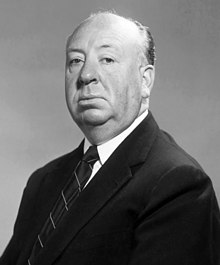
Alfred Hitchcock


Alfred Joseph Hitchcock is considered as one of the greatest directors of thrillers in the world. His work drastically influenced the film industry today and made the thriller genre a huge success.


Born  on the 13th of August 1899 in Leytonstone England, Hitchcock was raised a strict Catholic and had a pretty regular upbringing. He managed to secure his first proper job as an estimator for the Henley Telegraph and Cable Company.This is when his interest in cinematography began. He started to frequently visit the cinema and even began reading US trade journals. In 1920 Hitchcock managed to secure a job as a title designer for Lasky's new studio in London. Three years later Hitchcock was given his first shot at directing the remainder of the film "Always Tell Your Wife" as the original director fell ill during filming. Having impressed the studio chiefs, Hitchcock was given the opportunity to start directing the film "number 13". However this film was not completed as the studio closed down. After this failed attempt Hitchcock did not give up his pursuit of success. In 1925 he directed "the sound garden". This film was a great success and finally allowed him to start his career.

Alfred then went on to create over fifty films over a career spanning six decades. Because distinctive and recognizable directorial style he gained the status of a cultural icon throughout the world. Without Hitchcocks contributions to the film industry, modern cinema would not be what it is today.

                 
Complete List Of Hitchcocks Films
Number 13 (1922) (unfinished)
Always Tell Your Wife (1923) (unfinished)
The Mountain Eagle (1926)
The Lodger: A Story of the London Fog (1927)        
The Ring (1927)
Downhill (1927)
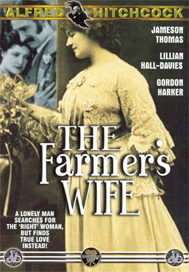
The Farmer's Wife (1928)
Easy Virtue (1928)
Champagne (1928)
Blackmail (1929)

The Manxman (1929)

Juno and the Paycock (1930)
Murder! (1930)
Elstree Calling (1930)
The Skin Game (1931)
Mary (1931)
Rich and Strange (1931)
Number Seventeen (1932)
Waltzes from Vienna (1933)
The Man Who Knew Too Much (1934)
The 39 Steps (1935)
Secret Agent (1936)
Sabotage (1936)
Young and Innocent (1937)
The Lady Vanishes (1938)
Jamaica Inn (1939)

Rebecca (1940)
Foreign Correspondent (1940)
Mr. & Mrs. Smith (1941)
Suspicion (1941)
Saboteur (1942)
Shadow of a Doubt (1943)
Lifeboat (1944)
Aventure Malgache (1944)
Bon Voyage (1944)
Spellbound (1945)
Notorious (1946)
The Paradine Case (1947)
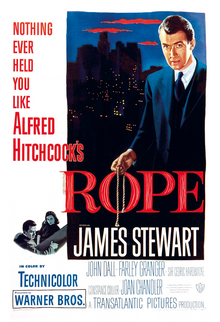
Rope (1948)
Under Capricorn (1949)

Stage Fright (1950)
Strangers on a Train (1951)
I Confess (1953)
Dial M for Murder (1954)
Rear Window (1954)
To Catch a Thief (1955)
The Trouble with Harry (1955)
The Man Who Knew Too Much (1956)
The Wrong Man (1956)
Vertigo (1958)
North by Northwest (1959)

Psycho (1960)
The Birds (1963)
Marnie (1964)
Torn Curtain (1966)
Topaz (1969)

Frenzy (1972)
Family Plot (1976)
The Short Night (1979) (cancelled)


Sound Excercise

Tuesday, 29 October 2013

Sound

In any film sound is majorly important. There are two types of sound: digetic and non digetic.

Digetic Sound
digetic sound refers to sound that you would typically hear within the world of narrative. Examples of digetic sound are dialogue, sound effects and music. However music is only digetic sound when it comes from a source within the scene; the source of the music doesn't have to be visible but it has to be expected to be used where it is heard (for example if a scene is filmed in a club/bar the source of the music may not be visible but hearing music in that setting is a norm).

Non Digetic Sound
Non digetic sound refers to sound that are not heard within film; basically everything outside the world of narrative. Examples of digetic sound are voice overs, captions, titles/subtitles and soundtracks.

As well as there being Digetic and non digetic there is also onscreen and off screen sound.

Onscreen And Off screen Sound
Onscreen sound is sound that is relative to what is shown in the shot e.g a telephone ringing where as off screen sound is sound that has no relation to what is happening in the shot. The most common use of off screen sound is music.

Parallel
Parallel sound is when the sound matches the action.
Contrapuntal
Contrapuntal sound is when the sound does not match the action.

Sound Bridge
A sound bridge helps create a smooth transition between two different scenes.


Friday, 25 October 2013

Psycho

"Psycho" is considered one of Hitchcocks greatest creations. The story starts with an office worker from Phoenix who meets her lover Sam during her lunch break. They want to get married but Sam cant afford to as he has to pay alimony to his ex wife. One afternoon at work she is trusted by her boss to put $40,000 in a One afternoon Marion is trusted to deliver $40,000 into a bank account. The money is the macguffin of this narrative. However the money is just too tempting so she decides to steal the money and start a new life. 
Whilst  on the run she gets caught in a storm which prevents her from going further so she decides to stay over night at the Bates Hotel. The motel is managed by a  young man called Nathan who appears to be completely under his mothers control.


The red herring of this film is brilliantly unique as the audience believe that the film is centered around money but really its about something more sinister. Because of this the murder of who appears to the protagonist shocks the audience. It appears that Norman's mother committed the murder however later on we learn that this was another red herring. This murder scene is seen as one of the most iconic scenes in cinema history. Throughout this scene an array of editing techniques is used such as fast paced editing and an iconic graphic match. 

The use of music throughout this films is archetypal. This is because whenever something major is about to happen the music starts which alerts the audience and builds suspense. 

Like the car scene and shower scene, fast paced action occurs frequently through the film. Another example is the staircase scene. After learning that Marian is missing her sister calls Sam and a detective. The detectives search leads him to the Bates Hotel where he continues with his investigation. Whilst there his investigation leads him to Norman's house where his mother supposedly lives. Once inside the house he walks up the stairs when suddenly he is attacked and repeatedly stabbed.


After not hearing from the detective Marion's sister and Sam head to the Bates motel where they trick Norman into thinking they're a couple. Whilst there they discover Normans mother died years ago after apparently murdering her partner. After murdering Normans stepfather she apparently committed suicide.This leaves the audience with many questions. Did Normans mother really kill herself? Is she really dead? is it her skeleton in the basement? No matter what the audience thought no one could predict that it was Norman Bates who murdered the detective and Marian and maybe even his own parents. It turns out that Norman is suffering from dissociative identity disorder. Norman developed this disorder as a result of severe emotional abuse from his mother during his childhood. After murdering his mother he assumed her personality to repress his awareness of her death and his feelings of guilt. Whenever his mother would take over completely he would kill anyone that threatened to break the illusion. 


Wednesday, 23 October 2013

Suspense And Shock

In thriller's suspense and shock is a key element. But what is suspense and shock and how is it used?

Shock
Shock in film is a sudden upsetting or surprising event/experience that causes an emotional response within the audience. Typical responses from the audience during a shocking scene are surprise, disbelief, fear and sometimes even relief. Shock is a key convention of a thriller as


Suspense
Suspense is a frame of mind in which a person feels uncertain about what is going to happen resulting in anxiousness and sometimes even fear. Suspense is majorly important within films of the thriller genre as it manipulates the audience into feelings of excitement and and tension which transforms into a form of anticipation keeping the audience on "the edge of their seat".


Saturday, 19 October 2013

What Is A MaGuffin?

A maguffin is an something that is desired by either the antagonist or the protagonist. Usually as an audience we are not informed by narrative of why the maguffin has such a significant importance. A maguffin is usually an object but it can also be a place, person or even an emotion felt by the antagonist. The maguffin acts as a motivator but is usually seen as an unimportant part of the plot.

Examples of maguffin's in film

Throughout film history maguffins have played a major role in creating the best film possible. If the maguffin does not match the rest of the film the the audience may find the film unrealistic.

Lord Of The Rings
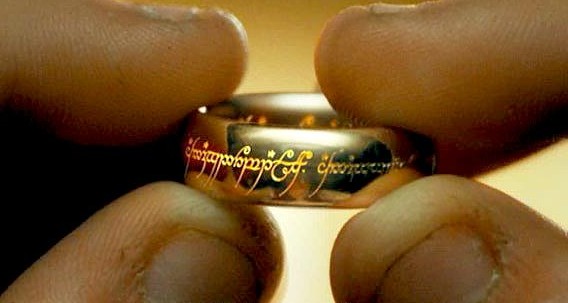
A good example of a maguffin is the ring in Peter Jackson's "Lord Of The Rings". In Lord Of The Rings Frodo is sent on a dangerous journey to destroy the ring in mount doom as it has the  ability to control all the other Rings of Power which could destroy Middle-earth. To the audience, although we can clearly see that the ring is powerful we seem to focus more on Frodo's actual journey rather than the ring.


Mission Impossible 3
Another good example is the rabbits foot in mission impossible 3. In the film weapons dealer Owen Davian wants the rabbits foot and it's up to Hunt to get it for him or else his fiancee Julia will be brutily murdered. This rabbits foot is unimportant to the audience and the protagonist but seems majorly important to the antagonist. This rabbits foot drives the whole of the plot. 


Thursday, 17 October 2013

Rules And Conventions Of A Thriller

There are many different conventions used throughout a thriller such as:
  • camera movement
  • close up/ long shot framing
  • low/high angle shots
  • jump cuts
  • digetic sound
  • red herrings 
Camera movement
tracking and pan shots are extremely common at the beginning of thrillers. This is done to guide the interest of the audience to a certain person/group.

Close up/long shot framing
close up framing is one of the most popular types of framing in a thriller. It is usually used to create suspense and make the scene appear more dramatic. Another frame type used frequently in thrillers is long shot framing. Long shot framing is used to establish the scene.

Low/high angle shots
Low angle and high angle shots are very common in thrillers. Low angle shots are used to make a character seem weak and vulnerable; completely defenseless. Where as high angle shots are usually used to express power and strength.  These shots are usually found a the point in which the antagonist has gained control and power over the protagonist. An example of this can be found in the crop duster scene in Alfred Hitchcock's "north by north west" Our protagonist Richard Thornhill is shown in many low angle shots to represent is vulnerability where as in contrast the crop duster is shown in many high angle shots to represent the antagonists power. 


Jumpcuts
a jump cut is an abrupt transition between one scene to another and are extremely common in thrillers. This is because they go smoothly with the fast paced plot of a thriller. Jump cuts are used to link two scenes together. Good examples of films with good jump cut is Guy Richie's "Snatch" and Stanley Kubrick's " A Space Odyssey". 


Digetic Sound
Digetic sound is used throughout thrillers as it is one of the most effective ways in which they can create suspense. Digetic sound such as the soundtrack plays a key role in most thrillers as it tells the audience how to react/feel without actually telling them. It also helps establish the scene.

Red Herrings
Red herrings are a typical convention of a thriller as they keep the audience in suspense and on the edge of their seats. A good example of a red herring is in the scene where we find out the Bourne actually worked for the people that are trying to kill him in Doug Limen's " The Bourne Identity"