Before the release of a film advertising is vital as it creates awareness. If the film industry relied only on hoping people would recommend the film they would make no money. Advertising is important as it builds excitement. The key ways in which films are advertised is:
Through trailers:
Posters:
Newspaper/Magazine Ads :
Social Networking:
Publicity Stunts:
All of these methods are extremely successful in reeling in an audience.
An enigma is a question that the audience have which is not answered immediately. A good example of this is in crime dramas such as Sherlock, criminal minds and body of proof when a crime is committed such as a murder. The audience instantly question who committed the crime but this question is not answered till the end when the person is revealed.
In the first ever episode of body of proof the body of a young girl is found on a pier. This is a good example of an enigma as it makes the audience question who killed her.
Another good example is in the Bourne identity when Jason Bourne is being treated by a doctor after being shot in the back . This is an enigma as the audience are questioning how he got the shot wound and why someone would try and kill him.
Charles Dickens invented the cliffhanger as a way in getting his readers to buy the next issue of a magazine that was currently running his story.A cliff hanger is a plot device where a character (usually the main ) is faced with a difficult dilemma or a huge bombshell is revealed. They are usually found at the end of a book/tv show/movie to interest the audience to watch/read the next one to find out how the character got through/dealt with the situation.
No Country For Old Men is a western thriller witch two main characters: Anthon Chigurh and Llewellyn Moss. Chigurh is a hired hit man that is quite obviously a psychopath. He has been hired to retrieve the $2 million dollars Llewellyn accidentally stumbled across and decided to keep.
In one of the first important scenes we see Chigurh escaping from police custody by murdering the supervising police officer by strangling him with his handcuffs. The only thing Chigurh had with him was an oxygen tank which he claimed was needed for his emphysema. Throughout the film this is his favoured weapon and is used to murder many people who get in his way of finding the money.It may look like a harmless weapon the tank contained pressurized gas rigged to a rubber tube that had a gun on the other end that shoots powerful, lethal projectiles.
As Llewellyn fights to survive while trying to escape with the money Chigurh is hot on his his and is tracking his location by a tracking device that is hidden within the money.
This film uses many of the typical conventions that are found in thrillers. For example the whole film is driven by the Macguffin. In this case the money. As an audience we have no interest in the money; our attention is focused on the characters.
No country for old men also uses fast pace editing to create suspense. An example of this is the hotel showdown scene. The editing starts of really slow which helps build the suspense as the audience are on the edge of their seat waiting for something to happen as it is just too quite. Suddenly the lock is shot open and the fast pace editing begins. In the space of a few seconds the camera shot has changed from a point of view of the lock to a medium shot of Llewellyn to a point of view of part of the lock on the floor. Then it jumps straight to a close up of Llewellyn.
It can also be argued that the money was in fact a red herring and that Chigurh was using it as an excuse to act on his psychopathic urges and "play god".
Throughout the film it becomes quite obvious that Chigurh has a god complex. An example of this is when he decides someones fate by flipping a coin and if they are incorrect he would kill them. This shows the audience that he is power hungry and insane.
When the suspense an action reaches its highest point the audience are hit with a surprising plot twist. The protagonist Llewellyn is murdered by Chigurh. This is not a typical convention of a thriller as the protagonist is usually escapes death and becomes a hero.
At the end of the film after a visit to Llewellyn widow Chigurh is involved in a car accident which results in a bone from his arm breaking through his skin. Instead of asking for help and admitting defeat he simply wraps a shirt around it and walks away. This shows that he can not be beaten. This unwillingness to admit defeat is also visible earlier on in the film when he gets shot in the leg by Llewellyn. He doesn't seek help he just cleans the wound and carries on his hunt for Llewellyn and the money.
CGI: Computer Generated Imagery is the process in which elements are generated and animated on a computer and composited into a scene. This makes it appear as if the elements were actually present during filming. Some movies are entirely comprised of computer generated imagery, with no live action photography whatsoever.
good examples of where CGI is used are:
In Twilight: New Moon when Paul and Jacob turn into werewolves.
In The Hobbit: Desolation Of Smaug. Smaug is made completely from CGI, he didn't actually exist in any of his scenes.
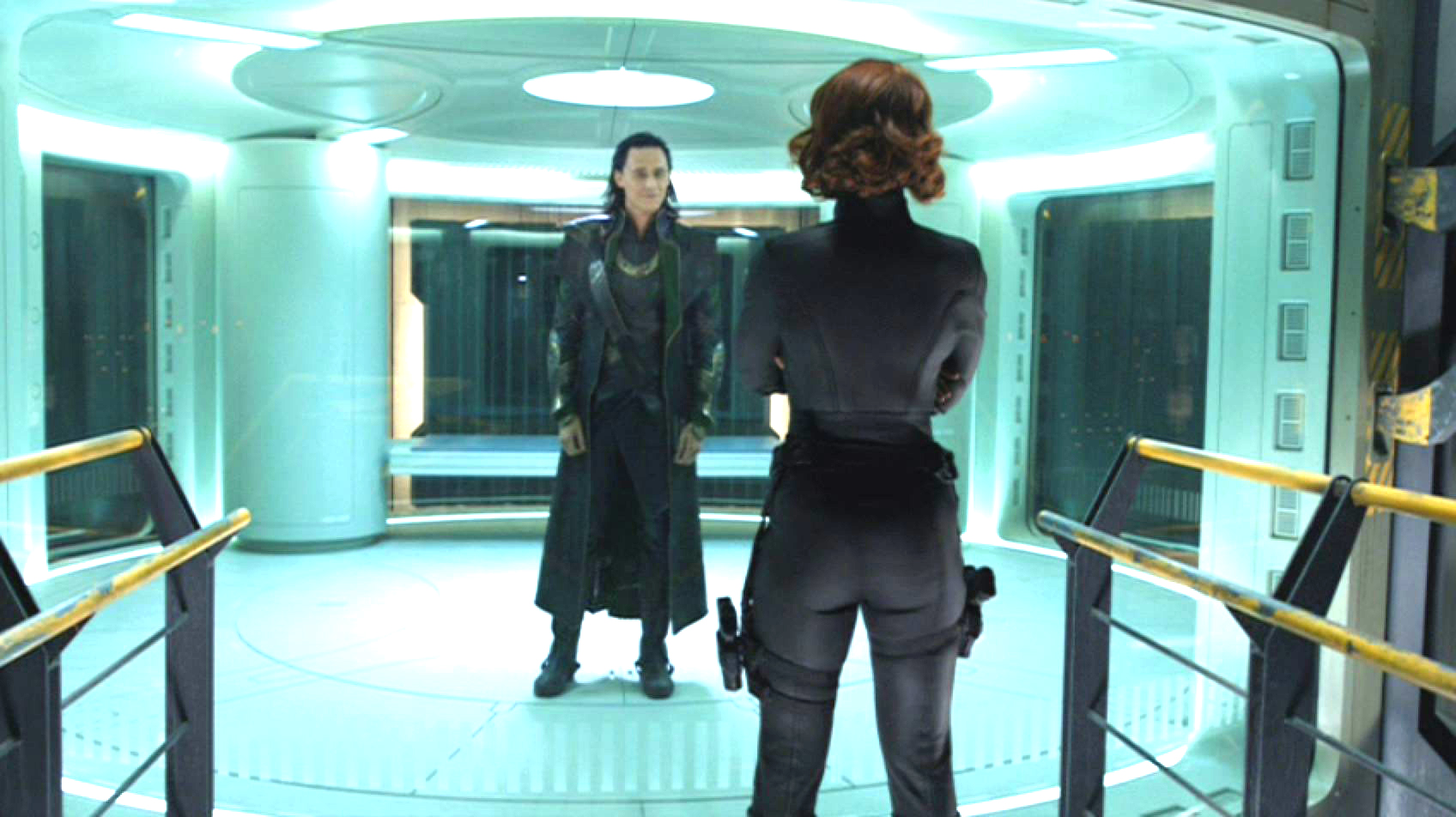
In The Avengers when the Hulk transforms.
and in Shark Boy And Lava Girl. The majority of the backgrounds used were computer generated.
A camera does not adjust to light the way our eyes do. Our eyes are able to glance around and dynamically adjust based on subject matter. When we view an object/person/place what we actually see is our mind's reconstruction of what we are looking at based on input provided by our eyes and not the actual light received by our eyes. A camera however replicates exactly what it sees. In many cases the lighting could look perfectly fine to the naked eye but when filming it could go dreadfully wrong. For example there could be too many shadows as a result of the subject blocking the light source. Perfect lighting is key in films as Every lighting set-up can provide a specific mood, emotion, atmosphere, and aesthetics to the overall viewing experience. Without light, it would not be possible to see anything, making it impossible to shoot a film.
Standard Lighting Setup
The Key Light
The key light is the brightest and most influential especially when used as the only light source as it shows volume. This technique of lighting forms shadows as the light is placed above and to the left.
The Back Light
The back light is used to help counteract the effect of the key light and it creates an outline/silhouette.
The Filler Light
The filler light assists with the softening of harsh shadows that the use of key and back lights create.
Under lighting
Underlighting is used when the main light source comes from beneath the subject. This lighting is particularity used in films of the thriller and horror genre.
Top Lighting
Top lighting is when the main light source comes from above the subject; the exact opposite of under lighting. This type of lighting highlights features and is particularly favored as it creates a glamorous look.
Back Lighting
Back lighting is when the light source comes from behind the subject. If this is the only light source used silhouettes are created.
Low key lighting
low key lighting is created by using only the key and back lights. This produces a sharp contrast of light and dark areas as very deep,distinct shadows are formed. A good example of how this is used is in the film Nosferatu (1922).
High Key Lighting
High key lighting uses more filler lights which makes the lighting appear more realistic.
Film noir is a genre of film that is known for its menace, pessimism, fatalism and dark lighting. The term "film noir" originated in France and was used to refer to an era of American film that became popular after world war two. In English this term simply translates to"film black".
Films of this genre were known for their low- key black and white visual style which developed from German cinematography and shadowed lighting. The plot usually involved hardboiled crime fiction. This was seen as a reaction of the depression that the world had experienced the previous decade.
Directors that became well known for their work in this genre are: Fritz Lang, Josef Von Sternberg, Otto Preminger and Michael Curtis.
Examples of early films noir are:
Mise en scene is a french term that translates to "in the scene frame". This term basically refers to everything in the scene. Every element helps create the visual world of the movie and the whole atmosphere in genral. The elements of mise en scene are:
Costume, hair and make up
Settings and props
Lighting and colour
Facial expressions and body language
Positioning of characters and objects in the frame
Use Of Colour
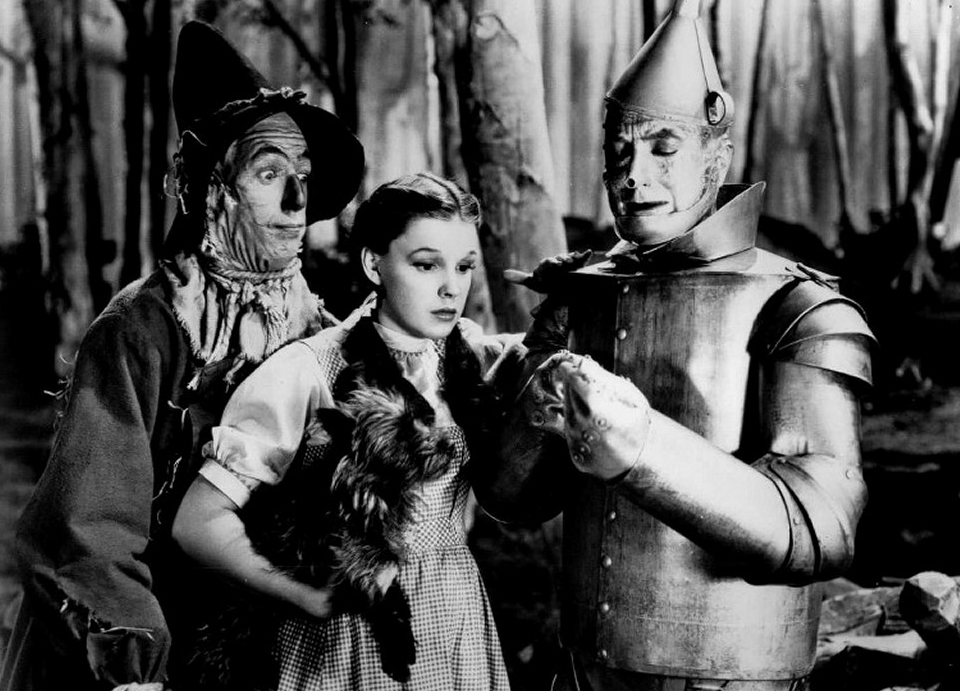
Colour is widely used throughout the film industry to show flashbacks or the difference between reality and fantasy. A famous example of colour being used to show a shift in reality is in "The Wizard Of Oz". In this film reality is shown in black and white to show the dull drab reality of american society at the time. Fantasy is represented by the over use of bright vivid colours.
Reality V Fantasy
George Meilies
In 1904 Georges Méliès was a french film maker who directed the film 'Voyage a Travers L'Impossible'. This was one of the first colour films to be created. However it wasn't colour as we know it. The film was originally black and white till Meilies decided to hand paint every frame.
Leon F. Douglass Leon F. Douglass was American inventor and co-founder of the Victor Talking Machine Company who registered approximately fifty patents, mostly for film and sound recording techniques. He also had a keen interest in motion picture. Inspired by an Ives Kromskop camera that he bought in 1898, he started to experiment with colour. In 1916 created a process for filming in natural color (without any use of hand tinting.) This process was called the Douglass Natural Colour process. This process involved a small device that attaches to the camera and could produce any hue, shade and tint of nature. Although this invention appeared marvelous it was only used to make one feature length film: Cupid Angling (1918). Cupid Angling was a silent film that starred Ruth Roland and Albert Morrison. This film is now considered as being a lost film.
A miniature effect is a special effect created for motion pictures and television programs using scale models. Scale models are often combined with high speed photography to make effects appear believable to the viewer. The use of miniatures has largely been superseded by Computer-generated imagery in contemporary cinema.
Where a miniature appears in the foreground of a shot, this is often very close to the camera lens. For example when matte painted backgrounds are used. Since the exposure is set to the object being filmed so the actors appear well lit, the miniature must be over-lit in order to balance the exposure and eliminate any depth of field differences that would otherwise be visible. This foreground miniature usage is referred to as forced perspective. Models and miniatures are copies of people, settings, buildings and objects. Miniatures or models are used to represent things that do not really exist, or that are too expensive or difficult to film in reality, such as explosions, floods or fires.